
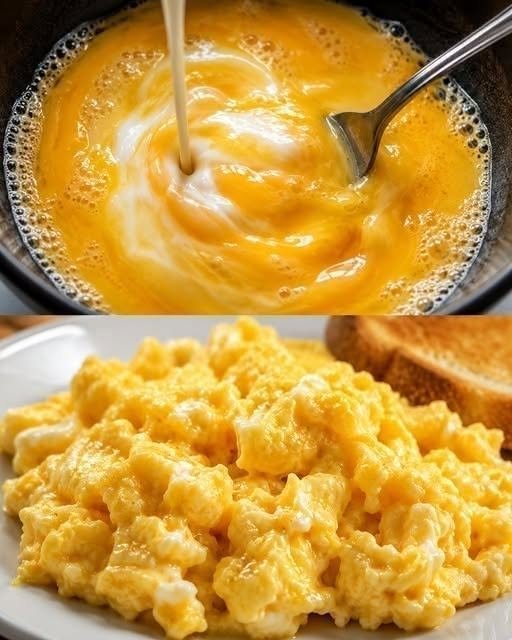
Soft, Creamy Scrambled Eggs – Full Detailed Recipe
Soft, creamy scrambled eggs are a simple, delicious breakfast made with eggs, butter, and a little milk or cream. The secret to perfect scrambled eggs is cooking them slowly over low heat, stirring gently, and removing them from the pan as soon as they are softly set.
This recipe produces tender, buttery eggs with a smooth texture and delicate curds. Serve them on toast, alongside fresh fruit, or as part of a hearty breakfast.
1. Recipe details
-
Preparation time: 3 minutes
-
Cooking time: 4–6 minutes
-
Total time: 7–9 minutes
-
Servings: 2
-
Difficulty: Easy
-
Cooking method: Stovetop
2. Ingredients
Main ingredients
-
4 large eggs
-
1 tablespoon unsalted butter
-
1 tablespoon whole milk or heavy cream (optional)
-
¼ teaspoon salt, or to taste
-
⅛ teaspoon ground black pepper
-
1 teaspoon cream cheese (optional, for extra creaminess)
Optional toppings
-
1 tablespoon chopped fresh chives or parsley
-
2 tablespoons grated cheddar cheese
-
A pinch of paprika
-
A little extra butter
-
Toasted bread for serving
3. Step-by-step cooking instructions
Step 1: Crack the eggs
-
Crack all four eggs into a medium-sized mixing bowl.
-
Check that no eggshells have fallen into the bowl.
-
Add the milk or cream if you want a richer, softer texture.
-
Whisk the eggs with a fork or small whisk for approximately 30–45 seconds.
Continue whisking until the yolks and whites are fully combined and the mixture has a consistent yellow color.
Tip: Milk is optional. Eggs cooked with butter alone can be wonderfully creamy, so do not add too much liquid.
Step 2: Prepare the pan
-
Place a nonstick frying pan over low heat.
-
Add the butter.
-
Allow the butter to melt slowly, swirling it around the pan.
-
When the butter has melted and begins to foam gently, move on to the next step.
Do not let the butter turn brown or burn.
Low heat is essential because eggs cook quickly. High heat can make them tough, dry, and rubbery before you have time to develop soft curds.
Step 3: Pour in the eggs
-
Pour the whisked egg mixture into the pan.
-
Let it sit for approximately 10 seconds.
-
When the edges begin to set, take a silicone spatula and gently push the cooked egg toward the center.
-
Tilt the pan so the uncooked egg flows into the empty spaces.
Keep the heat low throughout the cooking process.
Step 4: Cook slowly and stir gently
-
Continue moving the spatula slowly across the bottom of the pan.
-
Scrape the sides gently to prevent the eggs from sticking.
-
Fold the partially cooked eggs over themselves.
-
Allow the uncooked mixture to flow underneath the soft curds.
-
Repeat until the eggs begin to form tender, moist folds.
This should take approximately 2–4 minutes, depending on your stove and pan.
Avoid stirring too vigorously. Gentle movements create larger, softer curds, while aggressive stirring tends to break the eggs into small pieces.
Step 5: Add cream cheese or cheddar (optional)
For extra-creamy scrambled eggs, add 1 teaspoon of cream cheese when the eggs are partially set.
-
Break the cream cheese into small pieces.
-
Add it to the pan.
-
Fold it gently into the eggs.
-
Continue cooking over low heat until it melts.
Alternatively, add 2 tablespoons of grated cheddar cheese during the final minute of cooking.
The cheese should melt into the eggs without making the mixture overly thick.
Step 6: Season the eggs
Add salt and black pepper to taste.
Stir gently to distribute the seasonings evenly.
You can also add a pinch of paprika or finely chopped fresh herbs for additional flavor.
If you are serving the eggs with salty cheese or bacon, use less salt in the egg mixture.
Step 7: Remove the eggs from the heat
This is the most important step for achieving a creamy texture.
Remove the pan from the heat when the eggs are softly set, moist, and slightly glossy. They should not contain visibly raw, runny egg.
Let them rest for 15–30 seconds, stirring gently once or twice. The remaining heat will finish cooking them.
For food safety, cook eggs until set; if checking with a thermometer, egg dishes should reach 160°F (71°C).
Avoid leaving the eggs in the hot pan for too long, because they will continue cooking and may become dry.
Step 8: Serve immediately
Transfer the scrambled eggs to plates.
Sprinkle with fresh chives or parsley and serve with warm toast, avocado, or your favorite breakfast sides.
For the best flavor, serve immediately while the eggs are still warm and tender.
4. Tips for perfectly creamy scrambled eggs
-
Use fresh eggs: Fresh eggs provide a pleasant flavor and good texture.
-
Choose low heat: Slow cooking gives you better control over the consistency.
-
Whisk thoroughly: This helps the whites and yolks cook evenly.
-
Use butter: Butter adds flavor and helps keep the eggs tender.
-
Do not add too much milk: Excess liquid can dilute the egg flavor and make the texture watery.
-
Stir gently: Slow folding motions create soft, delicate curds.
-
Remove the eggs promptly: Residual heat continues cooking them after the pan leaves the stove.
-
Serve immediately: Scrambled eggs firm up as they cool.
5. Delicious variations
Cheesy scrambled eggs
Add grated cheddar, mozzarella, or Parmesan during the last minute of cooking. Stir gently until the cheese melts.
Garlic butter scrambled eggs
Melt the butter with a little finely minced garlic over low heat. Cook briefly before adding the eggs, taking care not to burn the garlic.
Spinach scrambled eggs
Add a handful of chopped spinach to the pan and cook until wilted. Pour in the egg mixture and cook gently.
Tomato scrambled eggs
Finely chop one small tomato and cook it separately until most of its moisture evaporates. Add the beaten eggs and continue cooking. This helps prevent watery scrambled eggs.
Spicy scrambled eggs
Add chopped green chili, a pinch of chili flakes, or a little cayenne pepper before cooking.
Herb scrambled eggs
Fold in chopped chives, parsley, or coriander just before serving for a fresh, fragrant finish.
6. What to serve with scrambled eggs
Scrambled eggs pair well with many breakfast foods:
-
Buttered toast or sourdough
-
Avocado slices
-
Grilled tomatoes
-
Sautéed mushrooms
-
Roasted potatoes
-
Fresh fruit
-
Chicken sausage
-
A simple cucumber and tomato salad
For a balanced breakfast, serve the eggs with whole-grain toast and fresh fruit.
7. Common mistakes and how to avoid them
| Mistake | Solution |
|---|---|
| Eggs become dry | Lower the heat and remove them sooner. |
| Eggs turn rubbery | Avoid high heat and prolonged cooking. |
| Eggs become watery | Use less milk and cook until softly set. |
| Eggs stick to the pan | Use a good nonstick skillet and enough butter. |
| Curds become too small | Stir slowly and fold rather than whisking in the pan. |
| Eggs continue cooking on the plate | Remove them just before they reach your preferred final texture. |
8. Storage instructions
-
Refrigerator: Place leftover eggs in a covered, airtight container within 2 hours of cooking and refrigerate for up to 3–4 days.
-
Reheating: Warm gently in the microwave in short intervals or in a skillet over low heat until steaming hot.
-
Freezing: Not recommended for the best texture, as scrambled eggs may become watery or rubbery after thawing.
Freshly cooked scrambled eggs generally taste best.
9. Frequently asked questions
Can I make creamy scrambled eggs without milk?
Yes. Eggs and butter are all you need for delicious scrambled eggs. Cook them slowly and stir gently to keep them tender.
Should I add milk or cream?
Both are optional. Milk gives a lighter result, while cream adds richness. A small amount is sufficient for four eggs.
Why are my scrambled eggs not creamy?
The most common reason is excessive heat or overcooking. Use low heat, stir gently, and remove the eggs when they are softly set and still glossy.
Can I make scrambled eggs with olive oil instead of butter?
Yes. Olive oil works well in a nonstick pan, although the flavor will be less buttery.
How do restaurants make scrambled eggs so soft?
Many cooks use gentle heat, frequent folding, and careful timing. Some also add butter or cream for richness. Removing the eggs before they become dry is the key.
Final result
These soft, creamy scrambled eggs are buttery, tender, flavorful, and easy to prepare with everyday ingredients. They are ideal for a quick breakfast, weekend brunch, or light meal.
Best tip: Cook the eggs over low heat, move them gently with a spatula, and remove them from the pan while they are still slightly glossy but fully set. This produces soft, creamy scrambled eggs without making them dry or rubbery.
