
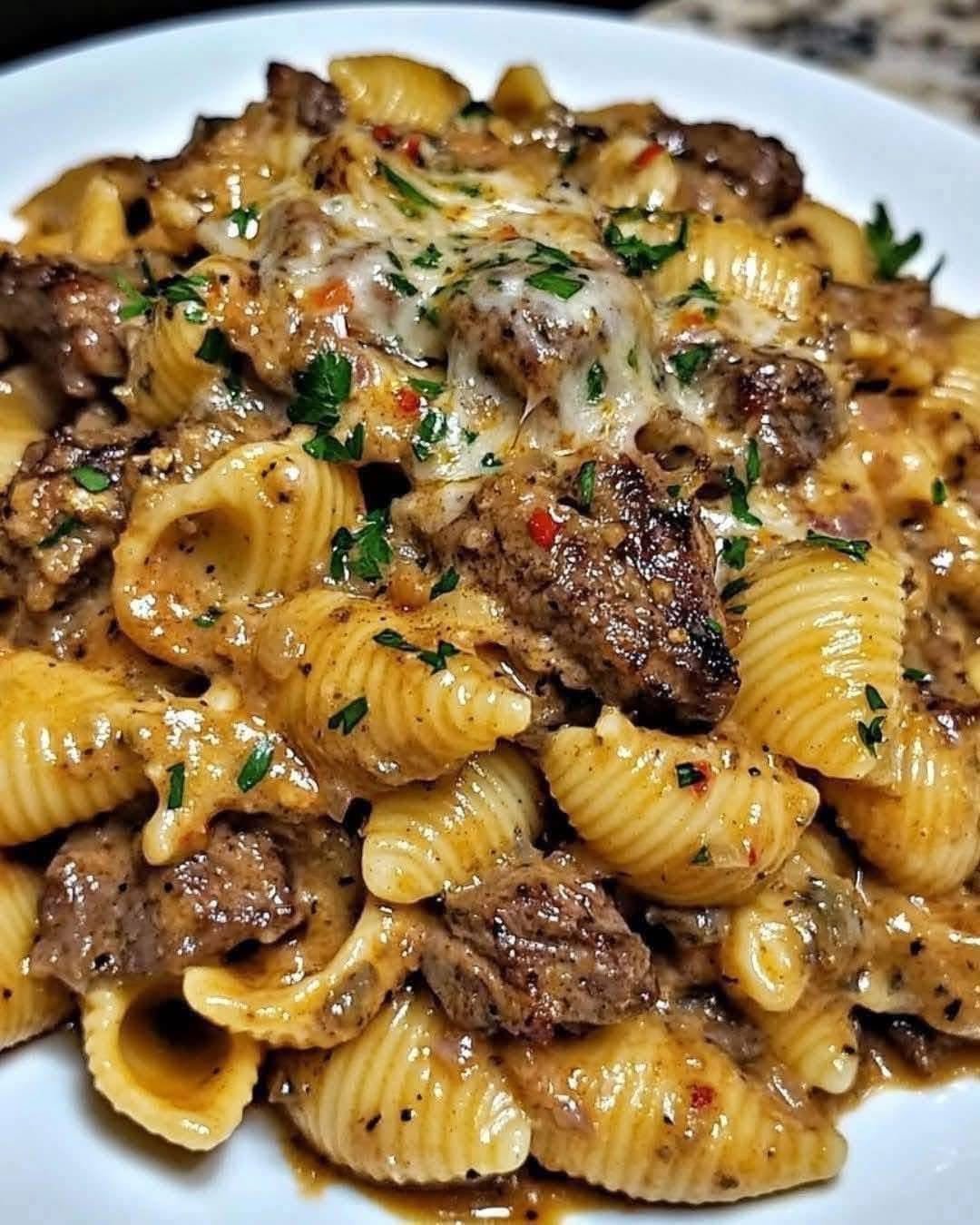
Creamy Paprika Steak Shells
Creamy Paprika Steak Shells is a rich, comforting pasta dish made with tender, seared steak, shell-shaped pasta, and a silky paprika cream sauce. The sauce combines garlic, butter, beef broth, cream, and Parmesan cheese to create a savory, smoky, slightly tangy flavor that coats every pasta shell.
It is perfect for a cozy family dinner, a weekend meal, or whenever you want restaurant-style steak pasta at home.
Recipe details
Preparation time
20 minutes
Cooking time
25–30 minutes
Servings
4 people
Difficulty
Easy to moderate
Ingredients
1. For the steak
-
450 g (1 lb) boneless steak, such as sirloin, ribeye, or rump
-
1 tablespoon olive oil
-
1 tablespoon butter
-
1 teaspoon smoked paprika
-
½ teaspoon garlic powder
-
½ teaspoon onion powder
-
½ teaspoon salt, or to taste
-
¼ teaspoon freshly ground black pepper
-
½ teaspoon dried oregano
-
1 teaspoon Worcestershire sauce (optional)
Best choice: Sirloin is a good all-purpose option because it has a rich beef flavor and remains tender when cooked correctly. Ribeye is richer, while rump is leaner and benefits from careful slicing.
2. For the pasta
-
300 g medium pasta shells
-
Water for boiling
-
1 tablespoon salt for the pasta water, adjusted to taste
-
1 tablespoon olive oil or butter, optional
Medium shells are ideal because their curved shape catches the creamy sauce. You can also use fusilli, penne, or rigatoni.
3. For the creamy paprika sauce
-
2 tablespoons butter
-
1 tablespoon olive oil
-
1 medium onion, finely chopped
-
4 cloves garlic, minced
-
1 small red bell pepper, finely diced (optional)
-
1½ teaspoons smoked paprika
-
½ teaspoon sweet paprika
-
¼ teaspoon chili flakes, optional
-
1 tablespoon tomato paste
-
1 tablespoon all-purpose flour
-
1 cup (240 ml) beef broth
-
1 cup (240 ml) heavy cream
-
½ cup (50 g) freshly grated Parmesan cheese
-
1 teaspoon Dijon mustard
-
1 teaspoon Worcestershire sauce
-
½ teaspoon dried oregano
-
¼ teaspoon black pepper, or to taste
-
Salt, as needed
-
½–1 cup reserved pasta water, as needed
4. For garnish
-
2 tablespoons fresh parsley, chopped
-
Extra grated Parmesan cheese
-
A pinch of smoked paprika
-
Freshly ground black pepper
Step-by-step cooking instructions
Step 1: Prepare the steak
-
Remove the steak from the refrigerator approximately 15–20 minutes before cooking, if practical.
-
Pat it dry thoroughly with paper towels. Removing surface moisture helps it brown instead of steam.
-
Slice the steak into thin strips against the grain, or cut it into bite-sized cubes.
-
Place the steak in a bowl.
-
Add smoked paprika, garlic powder, onion powder, salt, black pepper, oregano, and Worcestershire sauce if using.
-
Toss until all the pieces are evenly coated.
Allow the seasoned steak to rest while you prepare the other ingredients.
Important tip: Cutting against the grain shortens the muscle fibers and helps make each bite more tender.
Step 2: Boil the pasta shells
-
Fill a large pot with water and bring it to a boil.
-
Add salt to the water.
-
Add the pasta shells and stir immediately to prevent sticking.
-
Cook according to the package instructions until just al dente.
-
Before draining, reserve approximately 1 cup of the pasta water.
-
Drain the shells and set them aside.
Do not overcook the pasta. The shells will warm through again in the sauce, and slightly firm pasta holds its shape better.
Avoid rinsing the pasta because the surface starch helps the creamy sauce cling to the shells.
Step 3: Sear the steak
-
Heat a large skillet over medium-high heat.
-
Add the olive oil and allow it to become hot.
-
Arrange the steak in a single layer, working in batches if necessary.
-
Sear thin strips for approximately 1–2 minutes per side, or until nicely browned and cooked to your preferred doneness.
-
Transfer the steak to a clean plate.
-
Add the tablespoon of butter to the hot pan and let it melt around the remaining browned bits.
Do not overcrowd the skillet. Too much steak at once lowers the pan temperature and causes the meat to release moisture rather than develop a golden crust.
For whole steak portions, use a food thermometer and follow safe temperature guidance. Whole beef steaks are commonly cooked to at least 145°F (63°C), followed by a 3-minute rest; ground beef requires 160°F (71°C).
Pro tip: If the steak is already cooked to your preferred doneness, remove it from the skillet promptly. It will warm again briefly when added to the finished sauce.
Step 4: Sauté the onion and bell pepper
-
Reduce the heat to medium.
-
Add the butter and olive oil to the skillet if more fat is needed.
-
Add the finely chopped onion.
-
Cook for 3–4 minutes, stirring occasionally, until soft and translucent.
-
Add the diced red bell pepper, if using.
-
Cook for another 2–3 minutes until the pepper begins to soften.
Scrape up the browned bits left from searing the steak. These contain concentrated beef flavor and will enrich the sauce.
Step 5: Add the garlic and paprika
-
Add the minced garlic to the skillet.
-
Cook for approximately 30 seconds, stirring constantly.
-
Add the smoked paprika, sweet paprika, chili flakes if using, and dried oregano.
-
Stir for 15–30 seconds until fragrant.
-
Add the tomato paste and cook for another minute.
Paprika can become bitter if it burns, so keep the heat moderate and stir continuously.
Using both smoked and sweet paprika creates a balanced flavor: smoky and savory, with a mild sweetness and rich color.
Step 6: Create the sauce base
-
Sprinkle the flour over the onion and spice mixture.
-
Stir continuously for about 1 minute to cook out the raw flour taste.
-
Gradually pour in the beef broth, whisking or stirring as you go.
-
Scrape the bottom of the pan to release any browned bits.
-
Simmer for 2–3 minutes until the mixture begins to thicken.
Adding the broth gradually helps prevent lumps. The mixture should look smooth and lightly thickened before you add the cream.
Step 7: Add the cream and seasonings
-
Reduce the heat to medium-low.
-
Slowly stir in the heavy cream.
-
Add the Dijon mustard and Worcestershire sauce.
-
Stir until the sauce becomes smooth and evenly colored.
-
Simmer gently for 3–5 minutes, stirring occasionally.
Avoid a vigorous boil after adding the cream. Gentle heat helps maintain a smooth texture and reduces the risk of the sauce separating.
Taste the sauce and adjust the seasoning. Add a little salt or black pepper if needed.
Step 8: Add the Parmesan cheese
-
Reduce the heat to low.
-
Add the grated Parmesan a small handful at a time.
-
Stir after each addition until the cheese melts.
-
Continue until the sauce becomes creamy and coats the back of a spoon.
Freshly grated Parmesan generally melts more smoothly than pre-shredded cheese.
If the sauce becomes too thick, add reserved pasta water 1–2 tablespoons at a time. The starch in the water helps the sauce cling to the shells while keeping it silky.
Step 9: Add the pasta shells
-
Add the drained pasta shells to the creamy paprika sauce.
-
Toss gently until every shell is coated.
-
Simmer over low heat for 1–2 minutes.
-
If needed, add a little more pasta water to achieve a smooth, glossy consistency.
The sauce should fill the curved shells and coat their outer surfaces without pooling excessively at the bottom of the pan.
Step 10: Return the steak to the skillet
-
Add the seared steak and any accumulated juices from the plate.
-
Fold gently into the pasta.
-
Heat for approximately 1–2 minutes, just until the steak is warmed through.
-
Avoid prolonged cooking, which can make thin steak strips tough.
-
Taste once more and adjust the seasoning if needed.
If you prefer the steak to retain a distinct seared texture, reserve a few pieces and arrange them over the pasta just before serving.
Step 11: Garnish and serve
Remove the skillet from the heat.
Finish with chopped parsley, extra Parmesan, a pinch of smoked paprika, and freshly ground black pepper.
Serve immediately while the sauce is warm and creamy.
Tips for the best creamy paprika steak shells
-
Choose a suitable steak cut: Sirloin offers a good balance of tenderness, flavor, and price.
-
Pat the meat dry: Dry steak browns more effectively.
-
Sear in batches: This produces a better crust and prevents steaming.
-
Use smoked paprika carefully: It adds depth, but too much can overwhelm the cream sauce.
-
Grate Parmesan fresh: It usually melts more evenly.
-
Save pasta water: It helps adjust the sauce without making it watery.
-
Keep the heat low after adding cream: Gentle simmering helps prevent separation.
-
Add the steak at the end: This helps preserve its tenderness.
-
Serve promptly: Cream sauces naturally thicken as they cool.
Variations
1. Spicy creamy paprika steak shells
Add ½ teaspoon chili flakes or ½ teaspoon cayenne pepper to the paprika mixture. Start with less if you prefer mild heat.
2. Mushroom steak shells
Add 200 g sliced mushrooms after cooking the onion. Sauté until the mushrooms release their moisture and begin to brown before adding the garlic.
3. Cheesy steak shells
Stir in an additional ½ cup of grated mozzarella or cheddar at the end. Add gradually so the sauce remains smooth.
4. Garlic butter steak shells
Increase the garlic to 5–6 cloves and finish with an extra teaspoon of butter. This creates a richer garlic-forward flavor.
5. Lighter creamy steak shells
Replace part of the heavy cream with whole milk. The sauce will be thinner, so you may need slightly less pasta water and a little extra thickening from the flour.
6. Steak shells with spinach
Stir 2 cups of fresh baby spinach into the sauce just before adding the pasta. Cook for 1–2 minutes until wilted.
Serving suggestions
This pasta pairs well with:
-
Garlic bread or toasted sourdough
-
A fresh green salad with lemon vinaigrette
-
Steamed broccoli or green beans
-
Roasted zucchini or bell peppers
-
A simple cucumber and tomato salad
Because the sauce is rich, a fresh vegetable side or crisp salad balances the meal nicely.
Storage and reheating
-
Refrigeration: Transfer leftovers to an airtight container and refrigerate within 2 hours. Use within 3–4 days.
-
Reheating on the stove: Place the pasta in a skillet over low heat and add a splash of milk or broth. Stir gently until heated through.
-
Microwave reheating: Heat in short intervals, stirring between each one. Add a little milk or broth if the sauce has thickened.
-
Freezing: Freezing is not ideal because cream sauces may separate and the pasta can soften. For best results, enjoy the dish freshly made or refrigerated.
Reheat leftovers until steaming hot throughout.
Frequently asked questions
Can I use a different pasta shape?
Yes. Penne, rigatoni, fusilli, or rotini all work well. Choose a shape with grooves or curves to hold the sauce.
Can I make this without heavy cream?
Yes. You can use a mixture of whole milk and a little extra flour, although the result will be less rich. Add the milk gradually and simmer gently until thickened.
Why is my cream sauce too thick?
Pasta absorbs liquid as it rests. Stir in reserved pasta water, broth, or a little milk, one tablespoon at a time, until the desired consistency returns.
Why is my steak tough?
Common causes include using a less tender cut without slicing against the grain, overcrowding the pan, or cooking the steak for too long. Use thin strips, sear quickly, and return the meat to the sauce only at the end.
Can I prepare this recipe ahead of time?
You can prepare the steak, chop the vegetables, and measure the sauce ingredients ahead. For the best texture, cook the pasta and finish the cream sauce just before serving.
Can I omit the tomato paste?
Yes. The sauce will have a more purely creamy, smoky paprika flavor and a slightly lighter color. Tomato paste adds depth, but it is not essential.
Final result
Creamy Paprika Steak Shells combines tender seared beef, perfectly cooked pasta shells, smoky paprika, garlic, Parmesan, and a velvety cream sauce into one comforting meal.
My best tip: Sear the steak separately, build the paprika cream sauce in the same skillet, and return the steak only at the end. This develops deep flavor while helping the meat stay tender and the pasta sauce remain smooth and creamy.
